

i
An engine, not an app
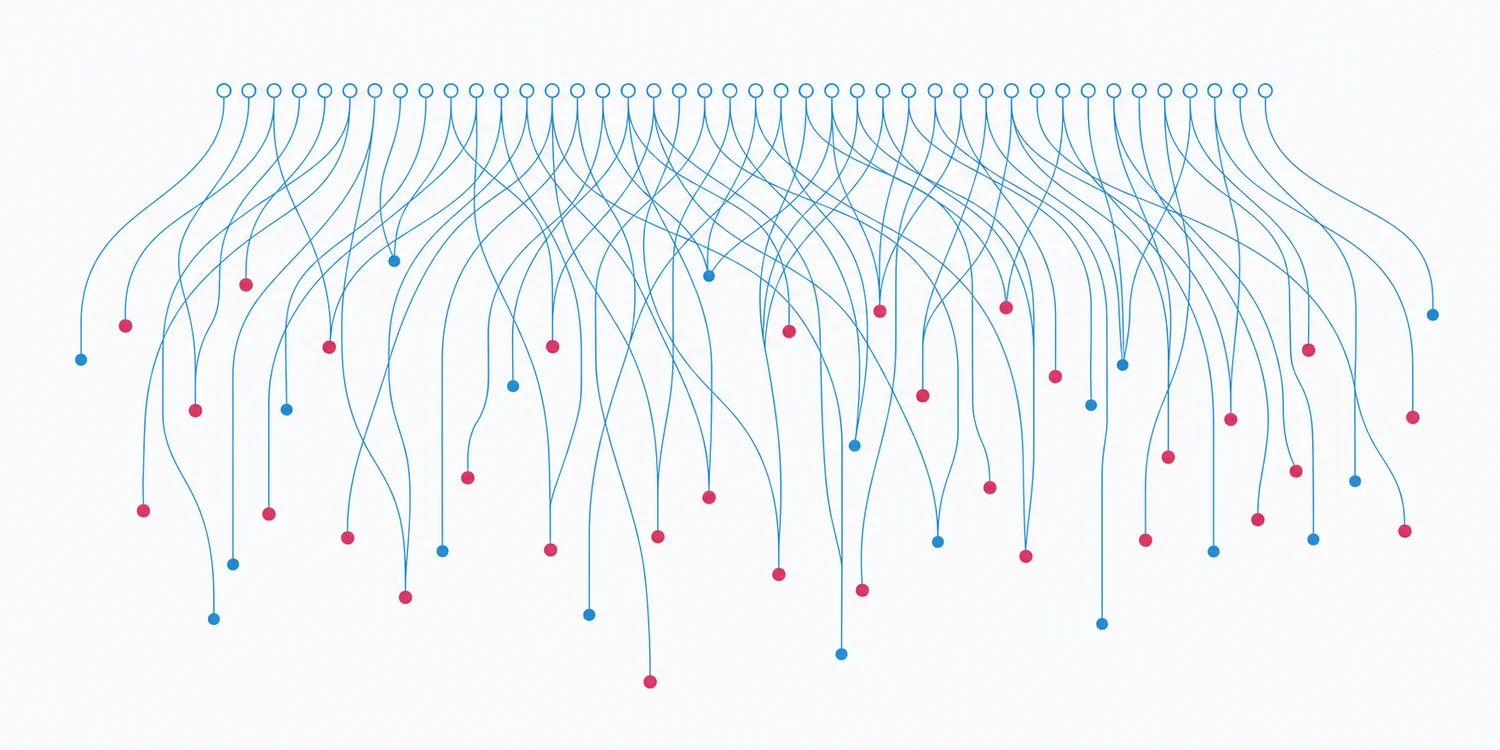
The Multi-Parameter Customization engine — MPC — sits underneath the content. Schools keep their own curriculum, their own pedagogy and their own values; the engine adapts how each student meets them.

 In Israeli schools since 2005 · AI in classrooms since 2018
One curriculum, infinite learning journeys — in a classroom, and at a desk.
I-Teach builds the personalization layer beneath the learning itself — an engine that gives every learner a tutor pitched exactly at them, while the teacher stays in command of the room. It has been running inside Israel's national education system since 2018, and the same engine now carries workforce learning.
Here for workforce training or professional development? I-Teach for Work01 — What I-Teach is
Most educational software sells a product to a student. I-Teach supplies a capability to an institution: a personalization engine that any curriculum can be loaded onto, in any subject, in any language.
i
The Multi-Parameter Customization engine — MPC — sits underneath the content. Schools keep their own curriculum, their own pedagogy and their own values; the engine adapts how each student meets them.
ii
The avatar is an assistant, never an evaluator. It absorbs the work that quietly defeats teachers — differentiating one lesson for thirty different learners — and hands back the judgement calls.
iii
Mathematics proved the engine at national scale. Physics, English, computer science, STEM and Hebrew as a second language run on the same infrastructure.
Math proved the engine. The platform is built for every subject.
Unrealized student potential
In a room of thirty diverse learners, one fixed pace lets high-potential students stagnate while others quietly fall behind. Hyper-personalized, adaptive teaching gives each of them their own pace.
Too few qualified teachers
The engine carries the subject expertise and the differentiation, reducing a school's dependence on scarce specialist teachers without removing the human from the room.
Teachers stretched thin
Administrative and repetitive load moves to the system, so teachers spend their hours on mentorship, creativity and the students who need a person rather than a program.
Values disconnected from daily practice
Each institution configures tone, emphasis and content, so a school's character is present in ordinary lessons rather than only in its mission statement.
Limited capacity for teacher training
Onboarding for a new subject is a configuration task, and training is continuous and built into the workflow rather than delivered in one-off sessions.
02 — The engine
Most adaptive software adapts to answers — get it wrong, get an easier question. MPC adapts to the learner. It maintains a continuously updated profile of each individual across twenty parameters and adjusts inside the session as it happens.
Learning profile
How this student learns best
Goals & planning
Where this student is headed
Progress & performance
How this student is moving
Motivation & empowerment
What drives and steadies this student
Engagement
What makes the material feel personal
Recognition & presence
Added in I-Teach Avatar 2
Seventeen parameters are supported in I-Teach Avatar 1; three are added in Avatar 2. A learner who is capable but discouraged needs the opposite response from one who is confident but missing a foundation — which is why motivation and emotional state are tracked alongside pace and knowledge, rather than collapsed into a single score.
03 — In the classroom
Every student gets their own assistant, calibrated to their profile, at the same time in the same room — in class or at home, live or on demand. The teacher orchestrates; the engine differentiates.

The system learns. The path evolves. The teacher stays in control.
How one teacher can hold a room of forty learners, each on a path calibrated to them — the pedagogic argument the MPC engine was built to serve.
A first look at the MPC-powered virtual pedagogist. This is a development preview of a capability under construction, shown here for transparency about what is built and what is not.
04 — Evidence
The figures below come from the MPC engine's record inside Israel's national school system, mostly in mathematics and the sciences — the foundation everything else is built on.
| Track | I-Teach | National | Comparison |
|---|---|---|---|
| Top level | 96.4 | 84.6 | |
| High level | 93.1 | 83.0 | |
| General level | 89.8 | 79.9 |
| Starting score | Reached 5 units | Avg. months |
|---|---|---|
| 80–100 | 100% | 7.46 |
| 60–79 | 99% | 7.48 |
| 40–59 | 99% | 7.69 |
| 0–39 | 95% | 8.62 |
| All students | 98% | 7.81 |
The average starting score of the cohort was 43 out of 100. Study conducted by Prof. Nitza Movshovitz-Hadar of the Technion on 875 Grade 9 students, September 2020 – August 2021.
98%
Retention
Sustained across subjects and age groups, against 60–70% typical of digital learning programs.
38%
Of the time to mastery
Students reached mastery in 38% of the hours conventional instruction required — roughly 2.5× faster.
83,000
Graduates
Across mathematics, physics, English, computer science and STEM programs.
4.91/5
Satisfaction
Consistent feedback from students, teachers and institutional partners.
06 — Beyond STEM
A second language is not learned by drilling answers. It is learned by speaking badly, repeatedly, somewhere safe. That is where a patient personalized partner changes what is possible.
Focused practice in reading, listening, speaking and writing, calibrated to a learner's current level and their specific error patterns, with mediation of the morphology and syntax particular to Hebrew.
Pronunciation, vocabulary and basic conversation in a non-judgemental setting that permits infinite repetition — the condition most learners never get, and the one that builds the confidence to speak.
The system reads motivation, frustration and confidence continuously and adjusts its feedback to sustain persistence and soften second-language anxiety.
Adaptations under development include Hebrew instruction for Arabic-speaking communities in Israel and English instruction for populations whose schooling gives it little classroom time.
The language product line is being developed in pedagogical and strategic partnership with the JEDAI initiative, with a global pilot for Hebrew instruction planned from January 2027.
A note on what is proven and what is in development. The outcome figures on this page describe the MPC engine's record in Israel's school system, principally in mathematics and the sciences. The second-language product line, the Avatar 2 parameters and the Diaspora Hebrew deployment are in active development; their own results begin with their first pilots.
07 — What it means in practice
Network-wide visibility into how students and teachers are actually progressing, recommendations aligned to your own curriculum and to Ministry frameworks, and a phased rollout that starts with lighthouse schools rather than a system-wide switch.
A live picture of the room — who is moving, who is stuck, who needs attention that is emotional rather than academic — plus a suggested intervention, and a class where thirty students can each work at their own level without thirty separate worksheets.
Support that is available during school hours rather than only in paid private lessons afterwards, at a pace that fits one particular child — and, for students who started far behind, a realistic route into the advanced tracks that usually close early.
08 — One engine, two proofs
Everything above happens in a school, because that is where we built the engine and where we proved it. But the architecture was never specific to a subject or an age. It encodes how one person moves from the ability they have to the ability they need — and it has already crossed out of its home domain once, on someone else's decision.
i
JEDAI, an initiative building shared infrastructure for global Jewish education, selected the MPC engine as its computational core — for Hebrew, Jewish history and identity, and Holocaust and antisemitism education, for learners aged 5 to 80. A dialogic, relational tradition with no structural resemblance to a quadratic equation. jedai.pplx.app
ii
I-Teach for Work applies the engine to AI literacy and regulatory training, professional development, language for work, and employment-integration programmes for adults for whom a lecture hall was never realistic. Pilot stage, structured as measurement, reported either way. I-Teach for Work →
09 — The team
Real school access, proven pedagogy, and the engineering experience to run it at national scale.
Yair Cohen
Executive Chairman
Former commander of Unit 8200. Decades of building and scaling deep-tech ventures and national-scale systems.
Yosi Levi
President
Built Teachin from zero over twenty years inside Israel's education system. Inventor of the MPC methodology.
Boaz Bryger
CEO
Twenty years at Qualcomm, and a mathematics teacher. Technion, electrical engineering and mathematics education.
Dr. Ron Davidson
CTO
Former CTO of Skybox Security. Stanford PhD. Architect of I-Teach's AI personalization infrastructure.
Alon Fliess
VP R&D
Microsoft MVP and Technion graduate. Thirty years building AI, cloud and distributed systems worldwide.
Jenny Gurevich
Pedagogical Director
Mathematics educator and teacher trainer. Leads I-Teach's classroom pedagogy.
Eva Shelley
Product & PMO
SaaS and AI-education product management. Translates deep technology into classroom value.